The Lahore Attack

I was fortunate that during my life I never experienced violence in Sri Lanka first hand. They have been so many bomb explosions over the years but I was never in the wrong place at the wrong time.
In Colombo, apart from these occasional bombs, life was relatively normal. People had the luxury of being physically detached from the war. Children went to school, people went to work, I played my cricket.
In other parts of the country, though, people were putting their lives in harm’s way every day either in the defence of their motherland or just trying to survive the geographical circumstances that made them inhabit a war zone.
For them, avoiding bullets, shells, mines and grenades, was imperative for survival. This was an experience that I could not relate to. I had great sympathy and compassion for them, but had no real experience with which I could draw parallels.
That was until we toured Pakistan in 2009. We set-off to play two Tests in Karachi and Lahore. The first Test played on a featherbed, past without great incident.
The second Test was also meandering along with us piling up a big first innings when we departed for the ground on day three. Having been asked to leave early instead of waiting for the Pakistan bus, we were anticipating a day of hard toil for the bowlers.
At the back of the bus the fast bowlers were loud in their complaints. I remember Thilan Thushara being particularly vocal, complaining that his back was near breaking point. He joked that he wished a bomb would go off so we could all leave Lahore and go back home.
Not thirty seconds had passed when we heard what sounded like fire crackers going off. Suddenly a shout came from the front: “Get down they are shooting at the bus.”
The reaction was immediate. Everyone dived for cover and took shelter on the aisle or behindthe seats. With very little space, we were all lying on top of each other.
Then the bullets started to hit. It was like rain on a tin roof. The bus was at a standstill, an easy target for the gunmen.
As bullets started bursting through the bus all we could do was stay still and quiet, hoping and praying to avoid death or injury.
Suddenly Mahela, who sits at the back of the bus, shouts saying he thinks he has been hit in the shin. I am lying next to Tilan. He groans in pain as a bullet hits him in the back of his thigh.
As I turn my head to look at him I feel something whizz past my ear and a bullet thuds into the side of the seat, the exact spot where my head had been a few seconds earlier.
I feel something hit my shoulder and it goes numb. I know I had been hit, but I was just relieved and praying I was not going to be hit in the head.
Tharanga Paranvithana, on his debut tour, is also next to me. He stands up, bullets flying all around him, shouting “I have been hit” as he holds his blood-soaked chest. He collapsed onto his seat, apparently unconscious.
I see him and I think: “Oh my God, you were out first ball, run out the next innings and now you have been shot. What a terrible first tour.”
It is strange how clear your thinking is. I did not see my life flash by. There was no insane panic. There was absolute clarity and awareness of what was happening at that moment.
I hear the bus roar in to life and start to move. Dilshan is screaming at the driver: “Drive…Drive”. We speed up, swerve and are finally inside the safety of the stadium.
There is a rush to get off the bus. Tharanga Paranawithana stands up. He is still bleeding and has a bullet lodged lightly in his sternum, the body of the bus tempering its velocity enough to be stopped by the bone.
Tilan is helped off the bus. In the dressing room there is a mixture of emotions: anger, relief, joy. Players and coaching staff are being examined by paramedics. Tilan and Paranavithana are taken by ambulance to the hospital.
We all sit in the dressing room and talk. Talk about what happened. Within minutes there is laughter and the jokes have started to flow. We have for the first time been a target of violence. We had survived.
We all realized that what some of our fellow Sri Lankans experienced every day for nearly 30 years. There was a new respect and awe for their courage and selflessness.
It is notable how quickly we got over that attack on us. Although we were physically injured, mentally we held strong.
A few hours after the attack we were airlifted to the Lahore Air Force Base.
Ajantha Mendis, his head swathed in bandages after multiple shrapnel wounds, suggests a game of Poker. Tilan has been brought back, sedated but fully conscious, to be with us and we make jokes at him and he smiles back.
We were shot at, grenades were thrown at us, we were injured and yet we were not cowed.
We were not down and out. “We are Sri Lankan,” we thought to ourselves, “and we are tough and we will get through hardship and we will overcome because our spirit is strong.”
This is what the world saw in our interviews immediately after the attack: we were calm, collected, and rational. Our emotions held true to our role as unofficial ambassadors.
A week after our arrival in Colombo from Pakistan I was driving about town and was stopped at a checkpoint. A soldier politely inquired as to my health after the attack. I said I was fine and added that what they as soldiers experience every day we only experienced for a few minutes, but managed to grab all the news headlines. That soldier looked me in the eye and replied: “It is OK if I die because it is my job and I am ready for it. But you are a hero and if you were to die it would be a great loss for our country.”
I was taken aback. How can this man value his life less than mine? His sincerity was overwhelming. I felt humbled.
This is the passion that cricket and cricketers evoke in Sri Lankans. This is the love that I strive every-day of my career to be worthy of.
Kumar Sangakkara

If only two nearly perfect modern era cricketer is to be portrayed, then the first must be Sachin Tendulkar and for the second spot, none has better claim as Kumar Sangakkara.
Former Captain, Sangakkara, was born on 27 October 1977 in Matale, Sri Lanka. The left-handed magical batsman and the exceptional wicket-keeper was the spine of Sri Lankan national team till his retirement.
After a scintillating career of around 15 years, Kumar Sangakkara finished on second spot in ODI and on fifth spot in Tests, in the matches much less than his contemporaries.
He was probably one of the most sound batsmen and a brilliant wicket-keeper of the 21st century and his numbers vouch for him, as he amassed a huge total 14,235 and 12,400 runs in 404 ODIs and 134 Test matches.
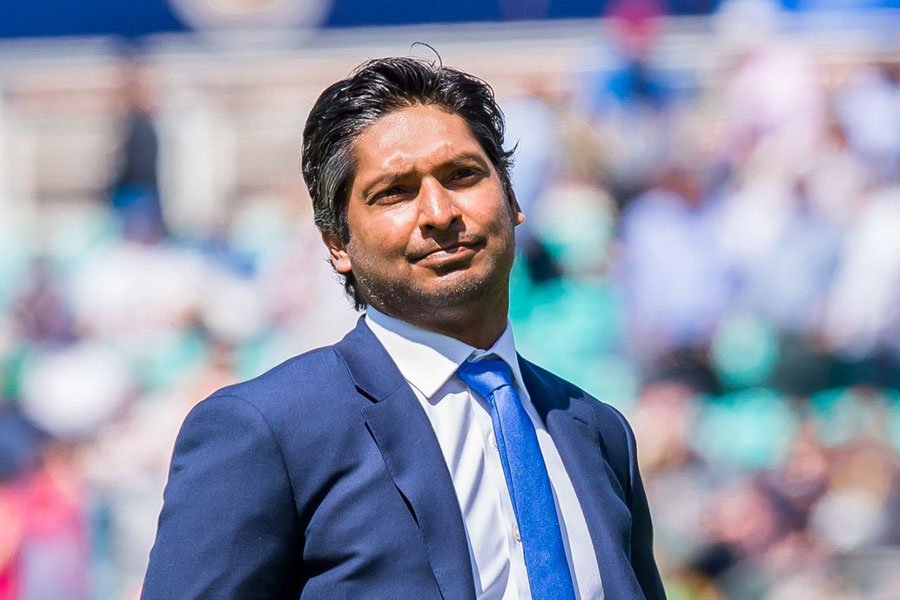
His evergreen form and never giving up attitude helped him earn some achievements that hold valuable importance at the international level. He was adjudged as the Wisden Leading Cricketer in the World in 2011 and 2014. He won LG People’s Choice Award for two consecutive years.
He was named ICC ODI Cricketer of the Year in 2011 and 2013, and ICC Test Cricketer of the Year 2012. ‘Sanga’ was also awarded with CEAT International Cricketer of the Year in 2015.
Colin Cowdrey Lecture
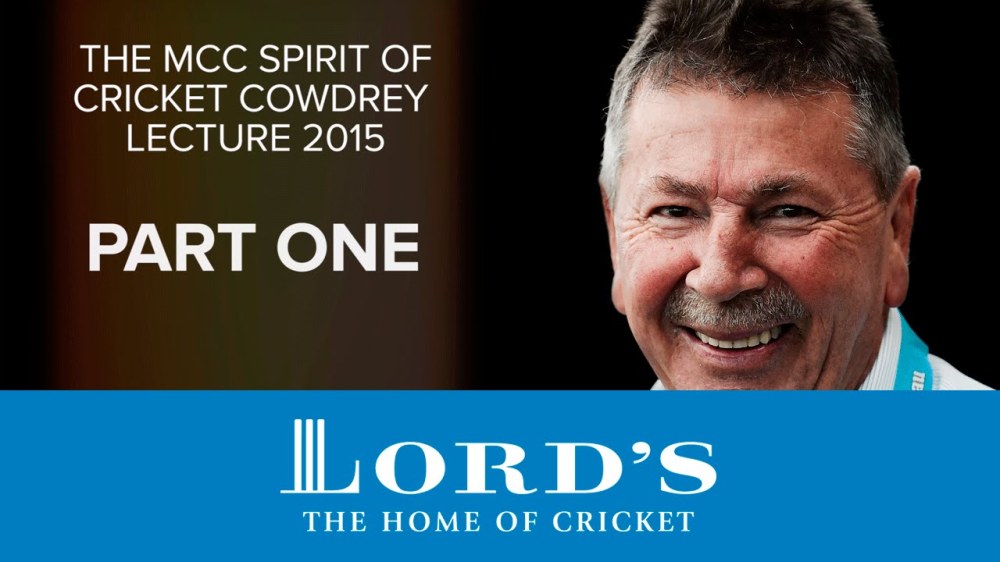
The Cowdrey Lecture, also referred to as the MCC Spirit of Cricket Cowdrey Lecture, is an annual event organised by the Marylebone Cricket Club (MCC) at the Lord’s Cricket Ground.
The event was first hosted in 2001, following the death of its eponym Late Lord Colin Cowdrey, in December 2000. Colin Cowdrey is reported to have been instrumental in adapting the Captains’ Charter as the Spirit of Cricket and subsequently adding it as the preamble to the Laws of Cricket.
It is held annually during the English summer and is delivered by pre-eminent cricketing personalities. The event is an invite only affair, with high profile cricketing personalities, représentatives of cricketing boards and journalists in attendance. The format of the event is simple: the cowdrey lecture followed by an informal discussion/question-answer session with a panel of distinguished personalities.
 Literary Globe