
Poem
Once upon a time, son,
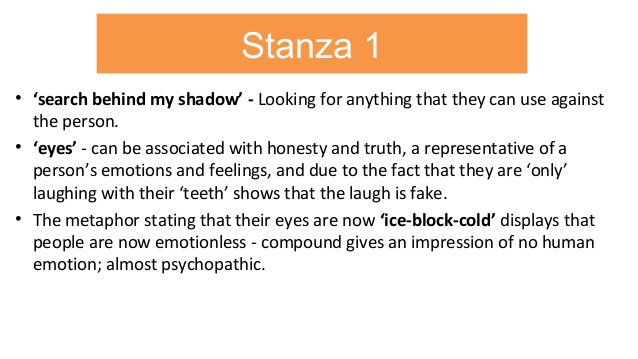
they used to laugh with their hearts
and laugh with their eyes:
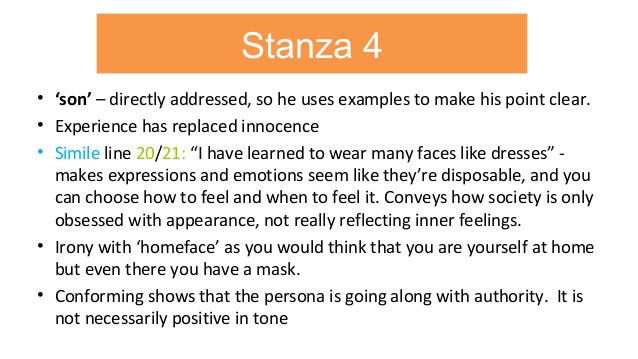
but now they only laugh with their teeth,
while their ice-block-cold eyes
search behind my shadow.
There was a time indeed
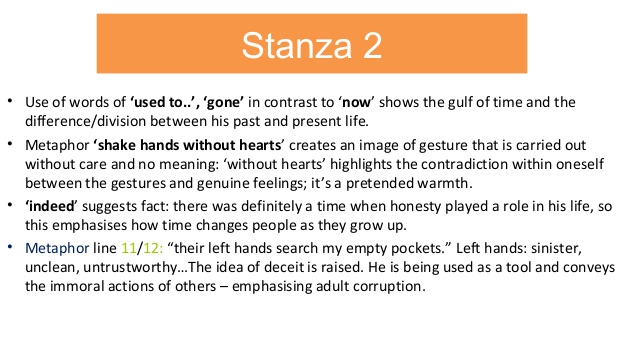
they used to shake hands with their hearts:
but that’s gone, son.
Now they shake hands without hearts
while their left hands search
my empty pockets.
‘Feel at home!’ ‘Come again’:
they say, and when I come
again and feel
at home, once, twice,
there will be no thrice-
for then I find doors shut on me.
So I have learned many things, son.
I have learned to wear many faces
like dresses – homeface,
officeface, streetface, hostface,
cocktailface, with all their conforming smiles
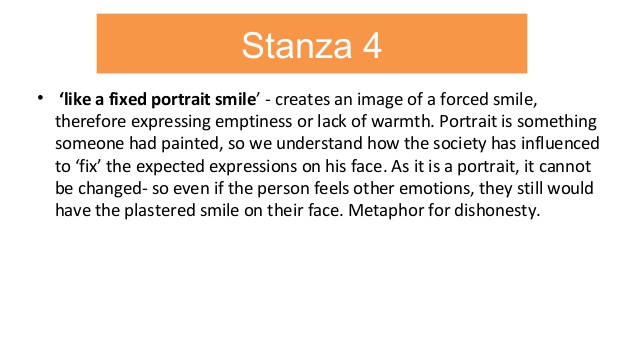
like a fixed portrait smile.
And I have learned too
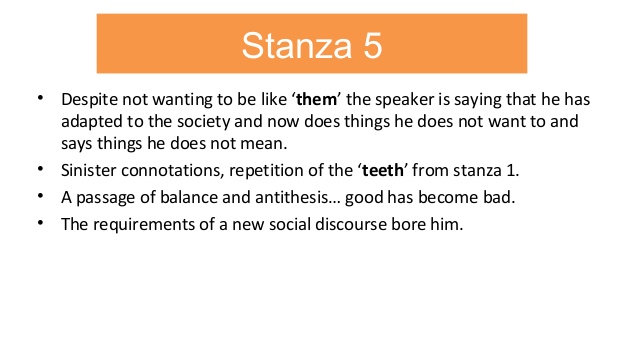
to laugh with only my teeth
and shake hands without my heart.
I have also learned to say,’Goodbye’,
when I mean ‘Good-riddance’:
to say ‘Glad to meet you’,
without being glad; and to say ‘It’s been
nice talking to you’, after being bored.
But believe me, son.
I want to be what I used to be
when I was like you. I want
to unlearn all these muting things.
Most of all, I want to relearn
how to laugh, for my laugh in the mirror
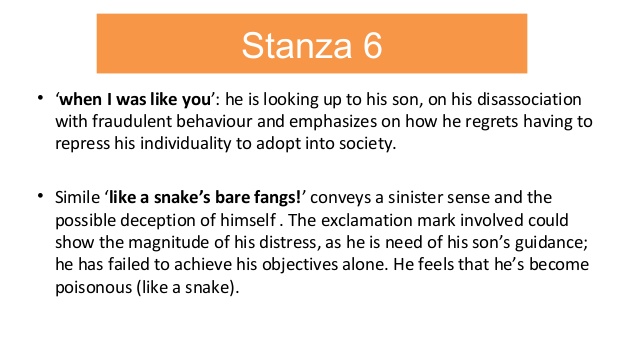
shows only my teeth like a snake’s bare fangs!
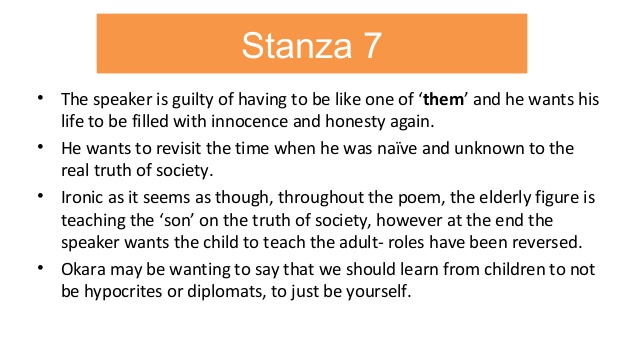
So show me, son,
how to laugh; show me how
I used to laugh and smile
once upon a time when I was like you.
Poet

Just as black writers in the United States and the Caribbean have faced the problem of how to express themselves in the language of those who enslaved them, black African writers have experimented with different ways of communicating in European languages the experience of colonization and the feel of their traditional cultures. Among the most famous West African writers working in the English language is Gabriel Okara, considered one of the founders of modern African literature. In his novel The Voice he constructed an unusual bridge over the divide between English and African languages: parts of the novel are written in a unique form of English that reproduces the patterns of Okara’s native Ijaw language.

Okara’s equally well-known poetry is also poised between European and African modes of expression.
A descendant of a noble family of the Ijaw ethnic group and the son of a businessman, Gabriel Imomotimi Gbaingbain Okara was born on April 24 (or 21), 1921, in Bumoundi in British-occupied Nigeria. His family adhered to the Christian Scientist religion, and Christian imagery would play a part in some of his mature works although they were rarely explicitly religious in theme. After attending local schools, Okara entered Nigeria’s British-administered higher education system when he was 14. He attended Government College in the Nigerian city of Umuahia and later Yaba Higher College, studying art as well as writing. He is said to have been inspired to become a poet when he read the poem “Lines Written in Early Spring” by the British Romantic writer William Wordsworth.
Notable awards
“Best All-Around”award, Nigerian Festival of Art, 1953, for “Call of the River Nun”Commonwealth Joint Poetry Award, 1979, for The Fisherman’s Invocation.
Analysis

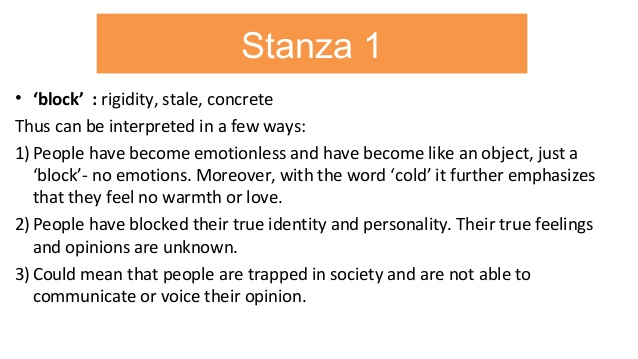
The heart is a symbol of genuine emotions, and the eyes the conveyor of the same (as sincere feelings are communicated through the eyes). Once upon a time people used to smile and shake hands with their hearts. Though they were rooted in primitivism, the emotions they embodied were genuine. Now, in the contemporary post-colonial context, the smile is purely plastic as it reveals only the teeth. The eyes are devoid of emotion and phrased as ‘ice-block.’ They appear without the slightest trace of warmth and humanity. They search behind the speakers shadows, as their intentions and motives are not explicit. They are now characterized by ulterior motives. There was a time when their very greeting (shaking of hands) was heart-felt. The ‘right hand’ here is the metaphor for the projected intention. The left hand for the ‘intended intention.’ The left hand gropes in the empty pockets of the speaker.
Niceties like “Feel at home!’ and ‘Come again’ are reiterated just for the sake of formalities. However, when the speaker makes an appearance for the third time, there is certainly a marked change in their behavior. Leave alone the thought of a warm reception, the doors are closed on him. The speaker has now learned to conform to this sophisticated world driven by calculation and manipulation. He talks of many faces that are nothing but metaphors of masks and disguises designed to suit specific needs and situations:
I have learned to wear many faces
like dresses – homeface,
officeface, streetface, hostface,
cocktailface, with all their conforming smiles
like a fixed portrait smile.

The portrait smile is a symbolic act of something that is not felt, but done purely for the sake of it. Conforming to the so-called refined culture the poet has attuned himself with the rest and learnt to smile only with his teeth and greet (shake hands) without any trace of sincerity (heart):
I have also learned to say, ‘Goodbye’,
when I mean ‘Good-riddance’;
to say ‘Glad to meet you’,
without being glad; and to say ‘It’s been
nice talking to you’, after being bored.
‘Goodbye’ is an expression that originated from the blessing ‘God be with ye.’ It’s meaning has deteriorated to ‘Good-riddance’. In the pseudo-modern fast-forward life people have lost the power to connect as human beings and communicate in naturalness. The poet tells his son that he wishes to transcend into the innocence of childhood characterized by purity where the soul is closer to God, as Wordsworth claimed in his Intimations Ode. He wants to unlearn all the muting things of sophistication.

Particularly, he wants relearn to smile as now the poison is becoming more obvious with the fangs showing. The showing of the fangs emblematizes how the people were transforming from their seeming disguise to shameless display of iniquity. The symbol of the snake also points to the first sin of Man.
So show me, son,
how to laugh; show me how
I used to laugh and smile
once upon a time when I was like you.
Towards the end of the poem, the speaker entreats with the son to teach him to emote. The poem, therefore exemplifies that ‘Child is the Father of Man.’

Setting
The mood of the poem is nostalgic. The personality is remembering how things used to be when he was young and innocent, like his son. The poem highlights the guilt and resentment an African man feels for himself to accept the culture of the westerners. He notices a marked change in the attitudes of his people-those who were once so genuine, warm and sincere have now suddenly turned cold and hostile towards him.

The poets’ use of a child like lexical field contradicts the poems morals about growing up. “Once upon a time” leads the readers to believe it to be like a story and the poet does present it in a narrative way, but once we realize he is talking to her son it could suggest the fairy tale feel is on his behalf. The poem is also structured like a mirror as the first 3 stanzas talk about innocence whereas the next 3 portray experience, furthermore, the poet is constantly reflecting on the two times of their life.
Theme and Tone
The poem has mixed feelings of childhood, regret, and innocence. The child in the poem is a symbol of innocence, purity, enthusiasm, happiness, and genuineness lacking in society. The child represents the group of people who have not been affected by Western Culture and abode by their own culture. The poet, struck by a sense of self-loathing and regret, turns to his son in his time of need and asks him to help him unlearn whatever he has learned and helped him regain his child-like innocence.
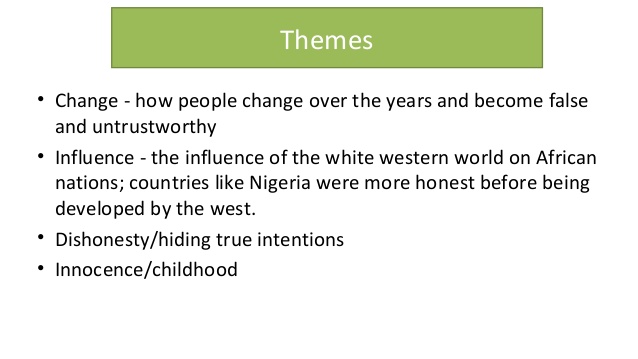

Innocence is a fading aspect in the man’s society. People always appear deceitful and cunning. The child, however, is a picture of innocence and acts without any malice or ulterior motive. The man wishes to gain this innocence from his son, though he fails to realize that innocence is not learned, a state of mind. Once it is lost, it is gone forever.
Poetic Devices
One of the poetic devices used is Metaphor. The poet says that people’s eyes are as cold as ice. This means that there is no warmth or real feeling in the words that they say, or how they behave. This metaphor literally allows you to visualize a block of ice, cold and unwelcoming.
The use of Similie is reflected in several areas. The poet compares people’s faces to smiles in a portrait. If you think about a portrait, it is usually very formal and stiff, even uncomfortable. Therefore, the implication is that the smiles are actually fake and stiff. They are conforming or trying to fit, to a preconceived mold that is set up by societal expectations. The poet compares the persona’s laugh to snakes’. When you think of a snake, words such as sneaky and deceitful come to mind. Therefore, the implication is that the persona is false just like the people he despises.
Conclusion
Once Upon A Time highlights the guilt and resentment an African man feels for himself to accept the culture of the westerners. He notices a marked change in the attitudes of his people. Those who were once so genuine, warm and sincere have now suddenly turned cold and hostile towards him.
He realizes that the early values, which always existed in the African society like sincerity, good-natured ness, simplicity, wholeheartedness, hospitality, friendliness, originality, identity, uniqueness and overall satisfaction, have now faced a drastic, dramatic change. He finds himself behaving in the same way as those around him. He feels a great sense of guilt and self-loathing and thinks about how fake he has become losing his identity and donning different, the fixed expression for different occasions, an unnatural smile plastered across his face.

He confesses to his son that he does not like the person he has become and wants to change, and go back to the way he was before, in his childhood. He asks his son to help him go back to who he was, and get back his lost identity. He expresses a desire to unlearn whatever he has forced himself to learn, in order for him to gain his sense of self back. He asks his son to help him be happy once again and acquire the childlike innocence he once possessed as a child.
 Literary Globe